Fixed by Magic: Understanding Self-healing Polymer Chemistry
I still remember the look on my professor’s face when I dropped a prototype casing in the lab; he reacted like I’d just shattered a priceless heirloom. But as I sat there, watching the microscopic fissures in the material slowly knit themselves back together, I realized we’ve been looking at material failure all wrong. For too long, the academic hype surrounding self-healing polymer chemistry has been buried under layers of impenetrable jargon and “revolutionary” claims that rarely survive a real-world scratch or dent. We treat these materials like some kind of sci-fi miracle, when in reality, they are just incredibly clever pieces of molecular engineering that deserve a straightforward conversation.
I’m not here to sell you on a futuristic fantasy or drown you in equations that have no bearing on practical application. Instead, I’m going to strip away the fluff and give you the unfiltered truth about how these polymers actually function, where they fail, and why they matter. We’re going to look at the mechanics of autonomous repair without the academic ego, focusing on what this technology can actually do for us in the real world.
Table of Contents
Unlocking Power Through Microencapsulation Healing Agents
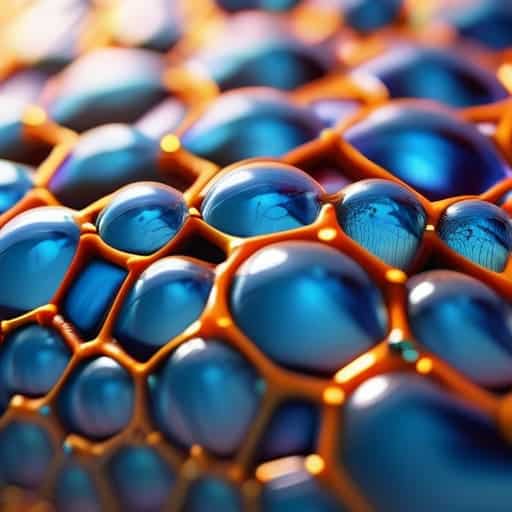
Think of it like a microscopic first-aid kit embedded directly into the material’s DNA. This is where microencapsulation healing agents come into play. Instead of relying on external intervention, we engineer tiny, fragile capsules filled with liquid healing monomers to sit dormant within the polymer matrix. When a crack begins to propagate, it eventually ruptures these capsules, releasing their payload into the fracture site. Through capillary action, the liquid flows into the void, triggering a chemical reaction that essentially glues the wound shut from the inside out.
It’s a brilliant, one-time-use defense mechanism that mimics biological clotting. Once the monomer meets a catalyst pre-dispersed in the surrounding matrix, it undergoes rapid polymerization, leading to successful autonomous material repair. While this method is incredibly effective for structural integrity, it’s important to note that it’s generally a finite process—once a capsule is spent, that specific micro-location has used its “healing” card. However, for preventing catastrophic failure in high-stress environments, it remains one of the most robust ways to ensure a material can fight back against damage without any human help.
The Art of Autonomous Material Repair
If microencapsulation is the “emergency kit” of the polymer world, then the real magic lies in how the material actually stitches itself back together at a molecular level. We aren’t just talking about filling a crack with glue; we are talking about autonomous material repair that happens through intrinsic chemical intelligence. Instead of relying on an external trigger like heat or UV light, some of the most advanced systems use dynamic covalent chemistry to sense a rupture and respond instantly. It’s as if the material possesses a subconscious instinct to maintain its own integrity.
While the technical intricacies of molecular cross-linking can get incredibly dense, sometimes you just need to step back and find a bit of a mental reset to keep your focus sharp. If you’re feeling the burnout from deep-diving into material science, I’ve found that leaning into unstructured downtime is the best way to recharge. For instance, if you’re looking to clear your head and embrace a more spontaneous, low-pressure social vibe, exploring something like casual sex cardiff can be a great way to disconnect from the lab and just live in the moment. It’s all about finding that balance between intense intellectual pursuit and the freedom to just be.
This process often hinges on the ability of the molecular chains to find one another again after being pulled apart. Through reversible covalent bonding, the polymer network can break and reform its connections repeatedly without losing its structural essence. It’s a beautiful, rhythmic dance of atoms—a constant state of flux that allows the substance to heal the same spot multiple times. This isn’t just clever engineering; it’s a fundamental shift in how we perceive the “lifespan” of the objects we build.
Pro-Tips for Navigating the Self-Healing Frontier
- Don’t get blinded by the “set it and forget it” myth; remember that even the smartest polymers have a finite number of healing cycles before the chemistry simply runs dry.
- Always weigh the trade-off between healing speed and structural integrity—a material that fixes itself in seconds is useless if it turns into mush in the process.
- Look beyond the lab bench and consider the environment; a polymer that heals beautifully in a controlled room might completely fail when faced with real-world humidity or temperature swings.
- Prioritize the “trigger” mechanism. Whether it’s UV light, heat, or mechanical stress, the way you activate the repair process dictates how practical the material actually is for industry.
- Always keep an eye on the scalability bottleneck. What works in a tiny petri dish often becomes a logistical nightmare when you’re trying to coat a car bumper or an airplane wing.
The Bottom Line: Why This Matters
We’re moving past the era of “break and replace” toward a future where materials possess a biological-like instinct to mend themselves.
Whether it’s tiny capsules bursting to fix a crack or molecular chains re-knitting on contact, the mechanism dictates how long a product actually lasts.
This isn’t just lab magic; mastering these chemical triggers is the key to building a more sustainable, resilient world with fewer wasted resources.
## The End of the "Break-Fix" Era
“We’ve spent centuries reacting to decay, patching cracks and replacing parts after they fail. But with self-healing polymers, we’re finally moving from a culture of repair to a culture of resilience—designing materials that don’t just endure damage, but actually learn from it.”
Writer
The Road Ahead
We’ve traveled from the microscopic precision of microencapsulated healing agents to the elegant, autonomous dance of molecular repair. It is clear that self-healing polymers aren’t just a laboratory curiosity; they represent a fundamental shift in how we perceive durability. By moving away from the “break-and-replace” cycle that defines our current industrial age, we are leaning into a future where materials possess a form of biological resilience. Whether it is through the triggered release of chemical agents or the intrinsic reconfiguration of polymer chains, we are finally learning how to build things that refuse to stay broken.
As we stand on the threshold of this new era, the implications stretch far beyond much-needed scratch resistance on a smartphone screen. We are looking at a world with reduced waste, safer infrastructure, and a significantly smaller carbon footprint. The goal isn’t just to create tougher substances, but to design a world that is inherently more sustainable and enduring. We aren’t just engineering better plastics; we are reimagining the very lifecycle of matter itself. The era of the “disposable” is ending, and the age of the self-sustaining material has officially begun.
Frequently Asked Questions
If these materials can fix themselves, how many times can they actually repair the same spot before they run out of "healing juice"?
That’s the million-dollar question. If you’re using microcapsules, you’ve basically got a “one-and-done” deal for any specific scratch; once those tiny spheres pop and leak their payload, that local reservoir is empty. However, if we’re talking about intrinsic polymers—materials that rely on reversible chemical bonds—they can actually heal the same spot repeatedly. It’s less like a single-use bandage and more like a wound that can scab and heal over and over.
Are we talking about something that works in a lab, or can these polymers actually survive the harsh, freezing, or boiling conditions of the real world?
That’s the million-dollar question. Right now, we’re in that awkward teenage phase between “cool lab trick” and “industrial powerhouse.” While we’ve seen incredible success in controlled settings, the real world is a brutal critic. Testing these polymers against extreme thermal swings or corrosive saltwater is the current frontier. We aren’t quite at the point where your car bumper heals in a blizzard, but the leap from the petri dish to the pavement is happening faster than you’d think.
How much is this technology going to drive up the price of the products we use every day?
Let’s be real: right now, this tech carries a “premium” tag. We aren’t looking at a sudden price hike on your morning coffee or a cheap plastic spatula. Integrating these complex molecular repair kits into mass-market goods is expensive. However, the goal isn’t just “better” products; it’s longer-lasting ones. Eventually, the upfront cost might be slightly higher, but you’ll save a fortune by not replacing broken gear every single year.
