Top 10 Sustainable Architecture Trends to Watch in 2024
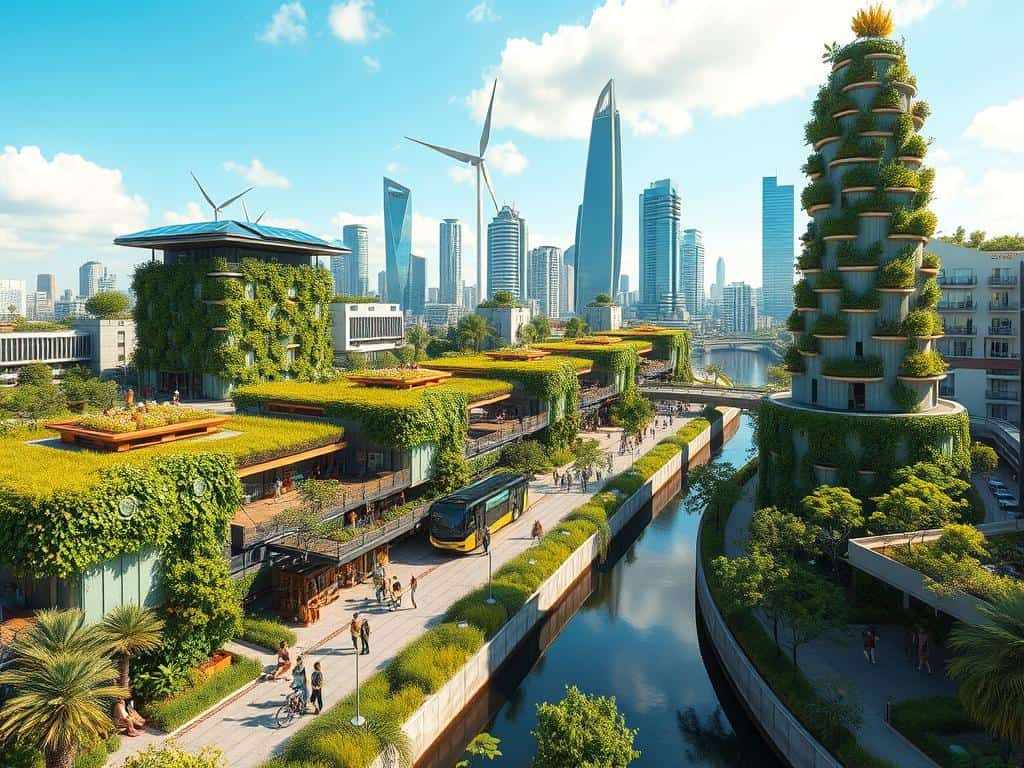
When I visited the Edge in Amsterdam, I was amazed. It perfectly mixed new ideas with green living. This building uses solar panels and collects rainwater, showing a new way to design homes.
I learned that green building is more than just a trend. It’s changing how we live. Eco-friendly materials are becoming more common. I wanted to find out what’s next in sustainable architecture for 2024.
This article will look at new trends like modular homes and smart buildings. We’ll see how these changes make our homes better. They help make cities cleaner and healthier for everyone.
Key Takeaways
- Sustainable architecture focuses on new tech and green materials.
- Modular homes are becoming popular for being efficient and green.
- Biophilic design adds natural elements to buildings, improving health.
- Smart tech helps build connected, sustainable communities.
- Adaptive reuse reduces waste and keeps cultural heritage in buildings.
Sustainable Architecture: A Revolutionary Approach to Design
Sustainable architecture is changing how we build our world. It focuses on fighting climate change and reducing harm to the environment. This movement is not just about saving energy. It’s also about making buildings better for the people who live in them.
Understanding the Importance of Sustainable Architecture
Sustainable architecture is more than just buildings. It’s about using resources wisely and designing in new ways. These methods help reduce the harm caused by old building practices. They make buildings healthier and help our planet last longer.
The Evolution of Eco-Friendly Building Practices
Eco-friendly building has come a long way. Old building methods ignored the environment for looks and cost. Now, new tech like artificial intelligence is key. AI helps buildings use less energy and choose materials that are better for the planet.
Integration of Eco-Friendly Materials
In sustainable architecture, choosing the right materials is key. Eco-friendly materials make buildings look good and work well. They help create a healthier planet and stronger structures.
Types of Sustainable Materials Used in Design
Bamboo, reclaimed wood, and recycled steel are top choices. They come from sources that are good for the planet. Using them means less harm to nature.
Low-VOC products also play a big role. They keep the air inside buildings clean. Precast concrete is another green option, with less CO2 emissions than old methods.
Benefits of Recycled and Renewable Resources
Recycled resources cut down on waste and carbon emissions. They make buildings last longer and cost less to maintain. This is good for the environment and our wallets.
Using renewable resources makes buildings more energy-efficient. As cities grow, using eco-friendly materials is more important than ever.
Energy-Efficient Technologies Changing the Landscape
Energy-efficient technologies are key in making buildings more sustainable. They help reduce environmental harm and improve comfort for those inside. These innovations are changing how we design and manage buildings.
Solar Energy Solutions in Modern Architecture
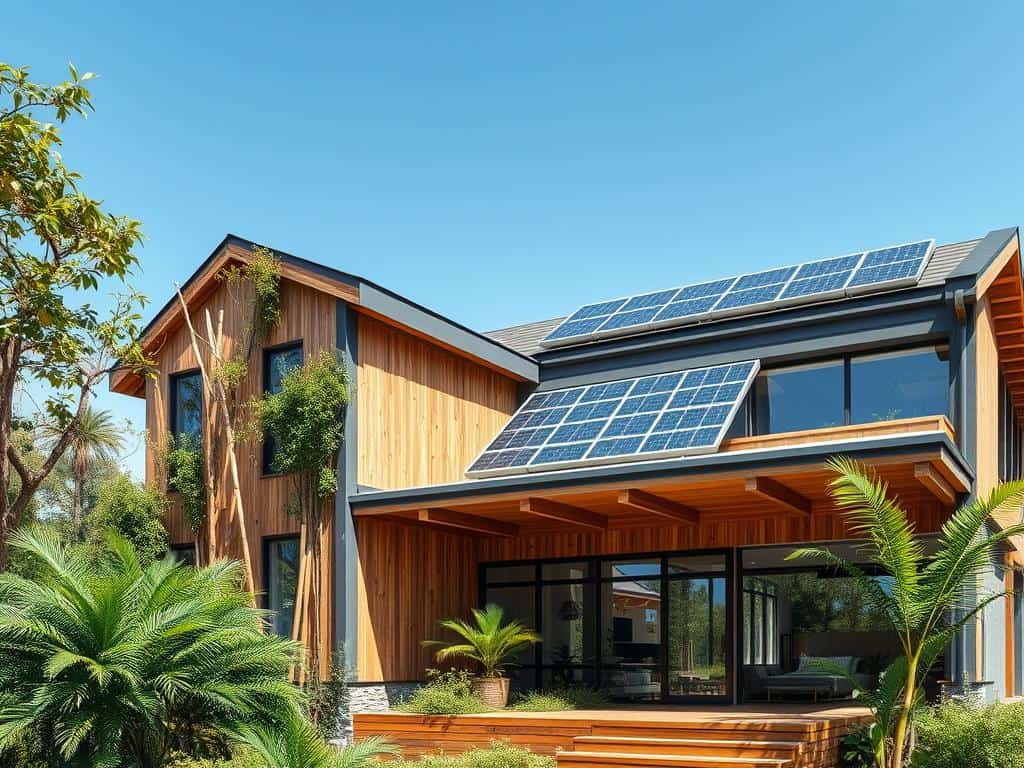
Solar energy is becoming a common feature in building designs. New solar panel tech makes it easy to add these systems to buildings. This cuts down on fossil fuel use and lowers energy bills.
Local governments are pushing for more solar use. They require new buildings and renovations to include solar panels. This shows a big commitment to green practices.
Role of Smart Technologies in Energy Conservation
Smart building automation systems are changing how we manage energy. They use sensors and data to track energy use. This lets buildings run more efficiently.
For example, machine learning in climate control can save a lot of energy. It makes buildings more comfortable while saving money.
Implementing Passive Design Strategies
Passive design strategies add to energy savings. They include things like the right building orientation and natural ventilation. These methods cut down energy use a lot.
Green roofs and walls also help. They look good and save on heating and cooling costs. Plus, trees and shrubs shade buildings and protect HVAC systems, saving even more energy.
Conclusion
Looking at the sustainable architecture trends, the future looks bright and full of change. We see eco-friendly materials and energy-saving tech coming together. This mix helps make living spaces better for our planet.
For example, using renewable energy can cut down on electricity bills by up to $2,500 a year. This shows how living green can save money too.
The UN Environment Programme points out that buildings are a big source of pollution, making up 38% of CO2 emissions. New ideas like the 15-minute city aim to make cities greener. They help us use less cars and stay healthier.
But, we face challenges like the high cost of green materials and limited access to these technologies. We need to find ways to make eco-friendly living more affordable and accessible for everyone.
In the end, our work towards sustainable architecture is about caring for our planet for the future. By focusing on these trends, we can create spaces that are good for today and tomorrow. This way, we can build a healthier world for all.
