10 Eco-Friendly Kitchen Tips for Sustainable Cooking
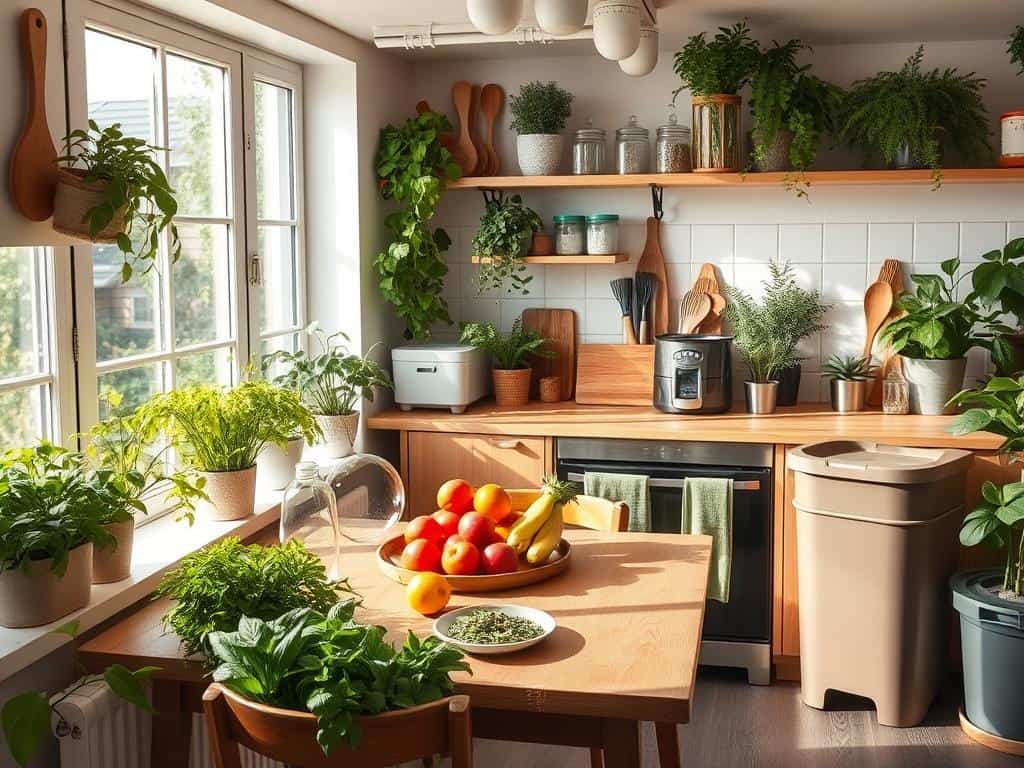
As I started my journey to live more sustainably in my kitchen, I found an old jar. It was filled with herbs and spices that had been forgotten for years. They were dusty and reminded me of how easy it is to forget about our kitchens.
I decided to make my kitchen more eco-friendly. I wanted to find ways to make my cooking space better for the environment. I began to look for tips on how to do this.
Creating an eco-friendly kitchen is more than just reducing waste. It’s about making choices that help the planet. I learned that small changes, like using energy-efficient light bulbs, can make a big difference.
By making these changes, I saved energy, money, and made my home healthier. I also helped the planet.
Let’s explore the world of green kitchens together. We’ll learn how to make our kitchens not only look good but also help the environment. We’ll find practical tips for a more eco-friendly cooking experience!
Key Takeaways
- Adopting eco-friendly kitchen habits can drastically reduce waste and conserve energy.
- Investing in sustainable materials can promote a healthier kitchen environment.
- Using energy-efficient appliances can lower utility costs over time.
- Creating meal plans helps decrease food waste and saves money on groceries.
- Switching to natural cleaning products benefits both health and the planet.
Understanding the Importance of an Eco-Friendly Kitchen
An eco-friendly kitchen is key to living sustainably. Making smart choices helps cut down on carbon emissions and makes our homes healthier. Using ingredients from sustainable sources and reducing food waste are big steps towards saving our planet.
Choosing eco-friendly kitchen tools, like induction cooktops, cuts down on energy use. Switching to plant-based meals uses fewer resources than meat. Even simple actions like composting and using water-saving cooking methods help a lot.
Adopting green practices, like using eco-friendly cleaners and avoiding plastics, makes our kitchen cleaner and safer. These actions help our ecosystem and support health. Using energy-efficient appliances and recycling saves resources and makes our kitchen more efficient.
Eco-Friendly Kitchen Tips
Turning my kitchen green is good for the planet and makes cooking better. I cut down on food waste and use eco-friendly ways every day. These choices are good for me and the Earth.
Reduce Food Waste
I plan meals and make detailed shopping lists to avoid waste. This way, I buy only what I need, preventing leftovers from going bad. Using airtight containers keeps food fresh longer.
I label items with expiration dates to keep track of them. I get creative with leftovers, making new dishes or giving them away. Composting kitchen scraps also helps reduce waste and makes my garden soil better.
Utilize Reusable Products
I choose reusable kitchen items over disposable ones. I use silicone bags instead of plastic and washable cloths instead of paper towels. These choices cut down on plastic waste and save money in the long run.
I suggest using Food Huggers to keep food fresh without plastic wrap. Switching to reusable utensils and party supplies makes gatherings more eco-friendly and fun.
Choosing Sustainable Materials for Your Kitchen
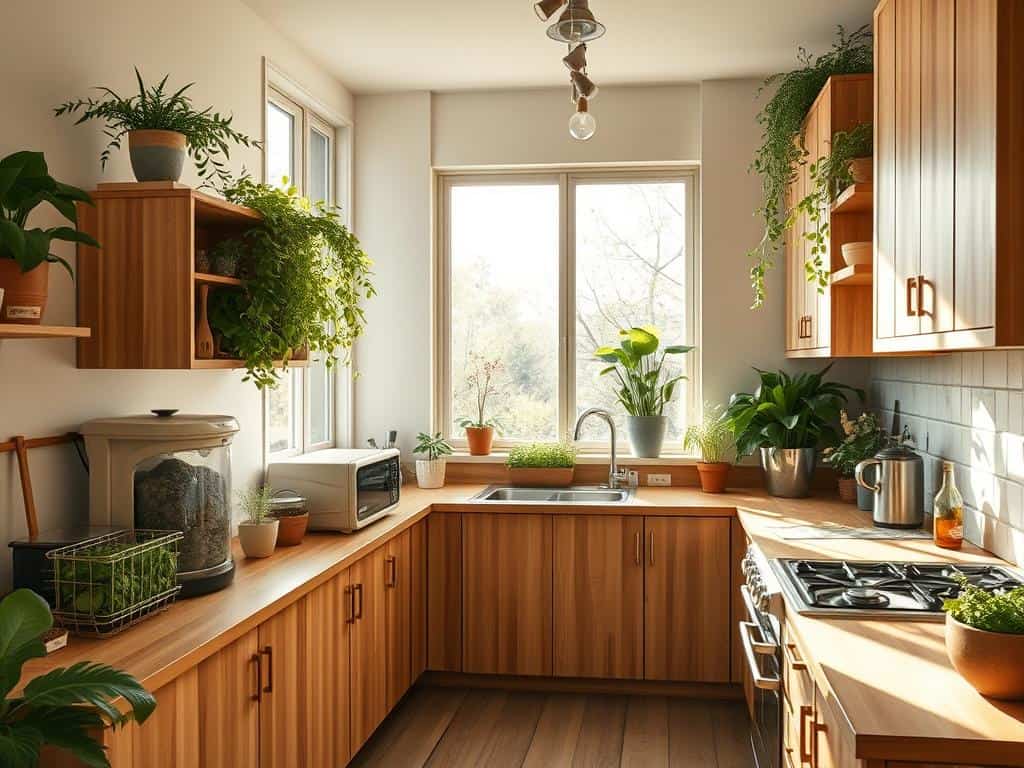
Creating an eco-friendly kitchen starts with picking the right materials. I choose bamboo and reclaimed wood for their durability and eco-friendliness. These options use fewer resources, reducing harm to the environment.
Opting for non-toxic options like low-VOC paints improves air quality. This makes my kitchen safer for my family. It’s a step towards a healthier home.
Choosing sustainable cookware like stainless steel or ceramic is also key. It avoids harmful chemicals found in non-stick coatings. This choice benefits my family’s health and the planet.
By using these materials, I create a kitchen that’s both stylish and eco-friendly. It shows my dedication to the environment while being functional.
Conclusion
Adopting eco-friendly kitchen practices is more than a trend. It’s a necessary step towards sustainable cooking. By following the tips in this article, I’ve cut down my environmental impact. I’ve also made my cooking more enjoyable.
Simple actions like meal planning and using leftovers help a lot. These actions reduce waste and make me healthier. They also help the planet.
Choosing the right materials and appliances is key. Using energy-efficient appliances and sustainable materials like bamboo or recycled glass helps a lot. These choices show my commitment to living green.
Every choice I make in the kitchen matters. By using local ingredients, avoiding single-use plastics, and choosing natural cleaners, I’m making a difference. These actions not only benefit me but also help our planet.
