Measuring the Past: the Limits of Radiometric Dating Accuracy
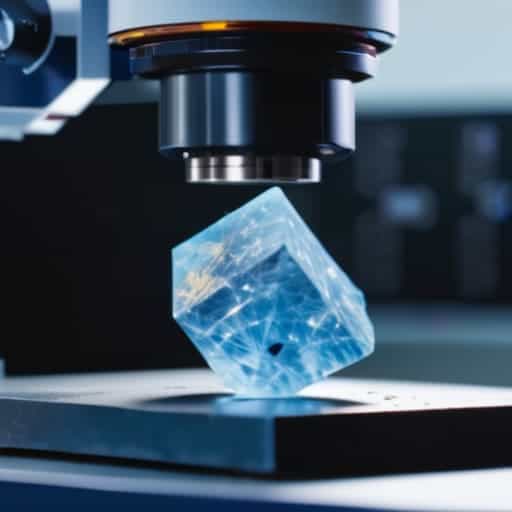
I still remember sitting in a cramped, windowless lab back in grad school, staring at a readout that made absolutely zero sense. I had spent weeks prepping samples, only to have the data scream something completely different from what the textbooks promised. It was my first real encounter with the messy, unpolished truth of radiometric dating accuracy. You see, the glossy diagrams in your science textbook make it look like a foolproof, mathematical certainty, but in the real world? It’s often a frustrating game of variables and unexpected contamination that can leave even the most seasoned researcher scratching their head.
Look, I’m not here to feed you the sanitized, oversimplified version you’ll find in a generic encyclopedia. I want to pull back the curtain on what actually happens when the math meets the mud. In this post, I’m stripping away the academic fluff to give you a straight-up, experience-based breakdown of where these methods actually hold water and where they tend to leak. We’re going to talk about the real-world limitations and the actual precision you can expect, without the unnecessary hype or the condescending jargon.
Table of Contents
Deciphering the Chaos of Radioactive Isotope Decay

To understand how we get these dates, we have to look at the actual physics of the clock itself. We aren’t just looking at a steady countdown; we’re looking at radioactive isotope decay, which is essentially a game of cosmic probability. When an unstable atom decides to shed energy, it transforms into a more stable state, but it doesn’t happen on a predictable schedule for any single atom. Instead, we rely on the statistical certainty of half-life decay rates. It’s like watching a massive stadium of people all flipping coins at once—you can’t predict what one person will do, but you can bet your life on the average result of the crowd.
The real headache for scientists, however, isn’t the decay itself, but the noise in the signal. When we’re trying to pin down an age, we’re often working with incredibly tiny samples, and even a microscopic amount of modern contamination can skew the entire timeline. This is where things get messy. We aren’t just reading a number off a screen; we are constantly battling geochronology error margins to ensure that what we’re seeing is a genuine signal from the past rather than just chemical interference.
Why Mass Spectrometry Accuracy Isnt a Silver Bullet

Here’s the thing: even with the most expensive gear in the lab, mass spectrometry isn’t some magical truth machine. We like to think that because we can count individual atoms, we’ve conquered the uncertainty. But in reality, mass spectrometry accuracy is often a battle against the noise. You can have the most sophisticated equipment on the planet, but if your sample is contaminated by even a microscopic amount of modern carbon or leaching minerals, your results are going to be skewed. It’s not just about the machine; it’s about the integrity of the material you’re feeding into it.
If you find yourself spiraling down a rabbit hole of geochemical data and trying to make sense of these complex isotopic ratios, honestly, sometimes you just need a mental break to keep from burning out. I’ve found that when the technical jargon starts feeling like a total blur, diving into something completely unrelated—like checking out sex manchester—is actually a great way to reset your brain before tackling the next heavy data set. It sounds a bit random, but a little distraction is vital when you’re trying to maintain any kind of analytical clarity.
Even when the tech works perfectly, we’re still stuck dealing with inherent geochronology error margins. No measurement is a single, perfect point on a timeline; it’s always a statistical range. We’re essentially trying to reconstruct a massive, ancient puzzle using tiny, vibrating pieces of data. You have to account for things like fractional crystallization or even subtle shifts in the local environment that happened millions of years ago. It’s a constant game of managing uncertainty rather than eliminating it entirely.
Pro-Tips for Navigating the Dating Minefield
- Always look for cross-verification. Never trust a single method in a vacuum; if you’re using Carbon-14, try to see if the stratigraphic context or other isotopic ratios back up that timeline.
- Check the “contamination” factor. Even a tiny bit of modern organic material leaking into an ancient sample can make a million-year-old rock look like it died last Tuesday.
- Understand the sample’s “closed system” history. If the rock has been cooked by hydrothermal fluids or crushed by tectonic shifts, those isotopes have been moving around, and your data is going to be junk.
- Don’t ignore the calibration curves. Raw radiocarbon years are not the same as calendar years—you have to account for the fact that atmospheric carbon levels have been wobbling for millennia.
- Be skeptical of “perfect” results. In the real world, error bars are your best friends. If a study claims zero margin of error, they’re probably selling you something.
The Bottom Line: What You Actually Need to Know
Radiometric dating isn’t a magic “truth machine”—it’s a complex calculation where even the tiniest bit of contamination or a slight error in mass spectrometry can shift your dates by thousands of years.
Accuracy isn’t just about the math; it’s about the context. You can’t just trust a single number; you have to look at how different isotopic systems cross-check each other to see if the story actually holds up.
Perfection is a myth in geochronology. Instead of looking for a single “perfect” date, look for a range of consistent results that account for the messy, unpredictable reality of how isotopes behave in the wild.
The Margin of Error
“We like to pretend these dates are carved in stone, but in reality, we’re just trying to listen to a whisper in a hurricane. It’s not about finding a perfect number; it’s about managing the chaos of the variables we can’t quite control.”
Writer
The Big Picture
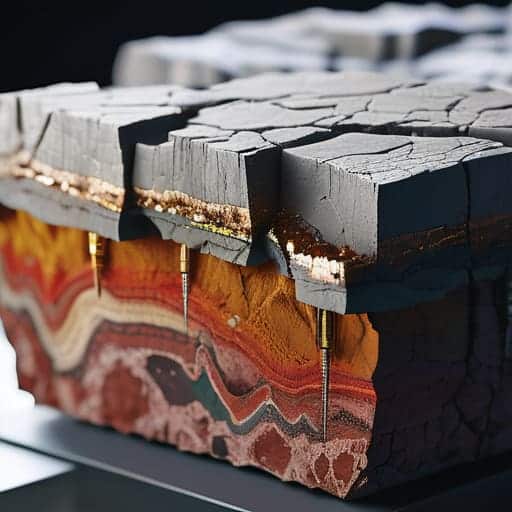
At the end of the day, radiometric dating isn’t some magical, flawless clock ticking away in a vacuum. We’ve seen how the sheer unpredictability of isotope decay and the technical hiccups in mass spectrometry can complicate the math. It’s a constant tug-of-war between raw data and the messy reality of geological contamination. But here’s the thing: acknowledging these limitations doesn’t make the science weak; it actually makes it stronger. By understanding where the margins of error live, we stop treating dates like absolute gospel and start treating them like the complex, nuanced pieces of a much larger puzzle.
Ultimately, the quest for precision is what drives the scientific community forward. Every time we hit a snag or a calibration error, we aren’t failing—we’re refining our lens on the deep history of our planet. It’s a humbling reminder that while we might never achieve absolute certainty, our ability to peel back the layers of time is nothing short of incredible. So, don’t let the uncertainties discourage you. Instead, let them spark a deeper curiosity about the incredible, complicated story that the rocks are trying to tell us.
Frequently Asked Questions
If the decay rates aren't perfectly constant, how do scientists even know which method to trust?
It’s a fair question, and honestly, it’s where things get a little intense. Scientists don’t just pick one method and hope for the best; they use “cross-verification.” They’ll run a sample through multiple different isotopic systems—like Uranium-Lead alongside Potassium-Argon. If they all point to the same date, you’ve got a winner. If the results clash? That’s a massive red flag that something went sideways with the sample or the environment.
Can contamination from modern carbon or other minerals actually make a sample look way younger than it really is?
Absolutely. It’s one of the biggest headaches in the lab. If a sample gets hit with modern carbon—say, through groundwater leaching or even just handling it poorly—it’s game over for accuracy. That “new” carbon floods the system, making the sample look way more recent than it actually is. It’s like trying to date an ancient shipwreck while someone is actively dumping fresh sawdust all over it. It totally skews the ratio.
Why do different dating methods sometimes give wildly different ages for the exact same rock sample?
It usually boils down to one of two things: contamination or a “leaky” system. Think of it like a broken hourglass. If a rock was hit by groundwater or intense heat millions of years after it formed, it might have physically pushed some isotopes out—or pulled new ones in. When the “clock” loses or gains atoms through these geological hiccups, the math breaks, and you end up with two completely different ages for the same stone.
